

Key information to know about KLIO-PS

Key foundations of psychology
Personality tests
Personality tests are psychological instruments designed to measure and evaluate various aspects of an individual's character, traits, and behavioral patterns.
The purpose of these tests is to provide information about a person's temperament, preferences, emotional responses, and how they interact with their environment and other people. This test can be used in various fields, such as career guidance, personal development, and organizational settings. The nature of this test cannot guarantee any advice or conclusions for clinical psychology. Personality tests typically consist of a series of questions or statements that respondents answer or rate based on how they apply to themselves.
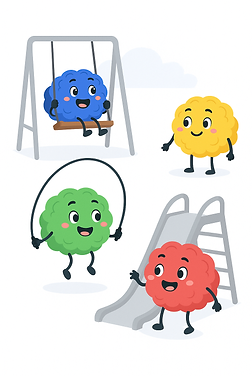
Difference between personality, cognitive styles, learning styles and social styles.
Personality and cognitive styles are two distinct aspects of human psychology that influence how individuals perceive, interact with, and respond to their environment. Both play a crucial role in shaping behavior, preferences, and abilities, but they operate at different levels of cognition and behavior.

Personalities
Personality refers to the unique set of emotional, attitudinal, and behavioral response patterns that an individual consistently displays over time.
Personality traits are relatively stable and are often described using models such as the Big Five, which includes openness, conscientiousness, extraversion, agreeableness, and neuroticism. These traits influence how individuals approach their social and physical environment, manage relationships, and cope with stress.
-
Stability: Personality traits are relatively stable across different situations and over time. They encompass a wide range of emotional responses and behavioral patterns.
-
Linear dimensions: The Big Five offers a linear and unidirectional approach, meaning that you can score high or low on each dimension.

Cognitive Styles
Cognitive styles, on the other hand, refer to an individual's preferred ways of processing information. They influence how they perceive, think, remember, and solve problems.
Cognitive styles refer not to what people think, but to how they think. Some examples of cognitive styles are field independence versus field dependence, holistic versus analytical thinking, and reflective versus impulsive thinking.
-
Information processing: Cognitive styles deal with the methods of perceiving, organizing, and interpreting information.
-
Task approach and problem-solving: These styles affect how individuals approach tasks and solve problems, including preferences for certain types of learning and decision-making processes.

Learning Styles
Learning styles refer to individuals preferred ways of absorbing, processing, understanding, and retaining information.
-
Individual learning preferences: People have different learning methods they naturally gravitate toward, which facilitate their understanding and application of new knowledge.
-
Composed of dimensions: A number of factors contribute to Learning Styles, including preferences for active participation versus observation, and receptiveness to emotional experiences versus analytical reasoning.

Social Styles
Social styles introduce a nuanced approach to understanding individual interaction preferences, illuminating interaction within their social or professional modus operandi.
-
Individual preferences for social interaction: People have different ways of approaching and socializing with others, which influences a wide range of behaviors in social situations, such as initiating contact in conversations, meetings, sales, and leadership.
-
Dimensions: A number of factors contribute to Social Styles, including preferences for being accompanied versus being independent, and tendencies toward complementary degrees of introversion or extraversion.
Main differences
Scope of application
Personality encompasses a wide range of human behaviors and emotional patterns.
-
Mientras que los estilos cognitivos, de aprendizaje, sociales y de experiencia del tiempo están específicamente relacionados con el procesamiento de la información, las estrategias de aprendizaje y resolución de problemas, la interacción con los demás y la gestión del tiempo.
Stability versus flexibility
Personality traits tend to be stable over time and in different situations.
-
Mientras que los estilos pueden variar en función de la tarea o el contexto, y adaptarse con el tiempo, a medida que los individuos, basándose en la experiencia, incorporan otros estilos. Así, por ejemplo, los estilos cognitivos engloban los estilos de aprendizaje, o cómo aprendemos y nos adaptamos.
Influence on behavior
Although both influence behavior...
-
La personalidad engloba una amplia gama de comportamientos humanos y patrones emocionales, mientras que los estilos cognitivo, de aprendizaje, social y de experiencia del tiempo están específicamente relacionados con el procesamiento de la información, las estrategias de aprendizaje y resolución de problemas, la interacción con los demás y la gestión del tiempo.
Linear versus paradoxical
Personality traits are typically measured using Likert scales for each dimension.
-
Las escalas van de menor a mayor, mientras que en nuestro enfoque combinamos dos pares de dimensiones paradójicas no excluyentes. Para una explicación más detallada sobre las paradojas, lea a continuación.
Carl Jung's preliminary work

Carl Jung's theory explains personality through two main attitudes (whether we focus more on our inner or outer world) and four types of mental functions (how we think, feel, perceive, and intuit).
Carl Jung suggests that we all have a favorite way of thinking or feeling that shapes our personality. This insight helps us see the depths of our minds, demonstrating that our personalities are more than just labels; they are a blend of our conscious preferences and hidden traits.
His theory of personality introduces a nuanced framework, emphasizing the balance between introversion and extroversion, along with four cognitive functions: thinking, feeling, sensing, and intuition.
These functions are classified as rational (judging) and irrational (perceiving), and they shape our understanding of and interaction with the world. Jung postulated that individuals favor one dominant function, which influences their conscious behavior, while the less preferred, or inferior, function operates unconsciously. This theory illuminates the complexity of human psychology, suggesting that personality is a dynamic interaction of conscious and unconscious elements, rather than fixed categories.

Interested in learning more?
Click on the following links to learn more about our KLIO-PS methodology: